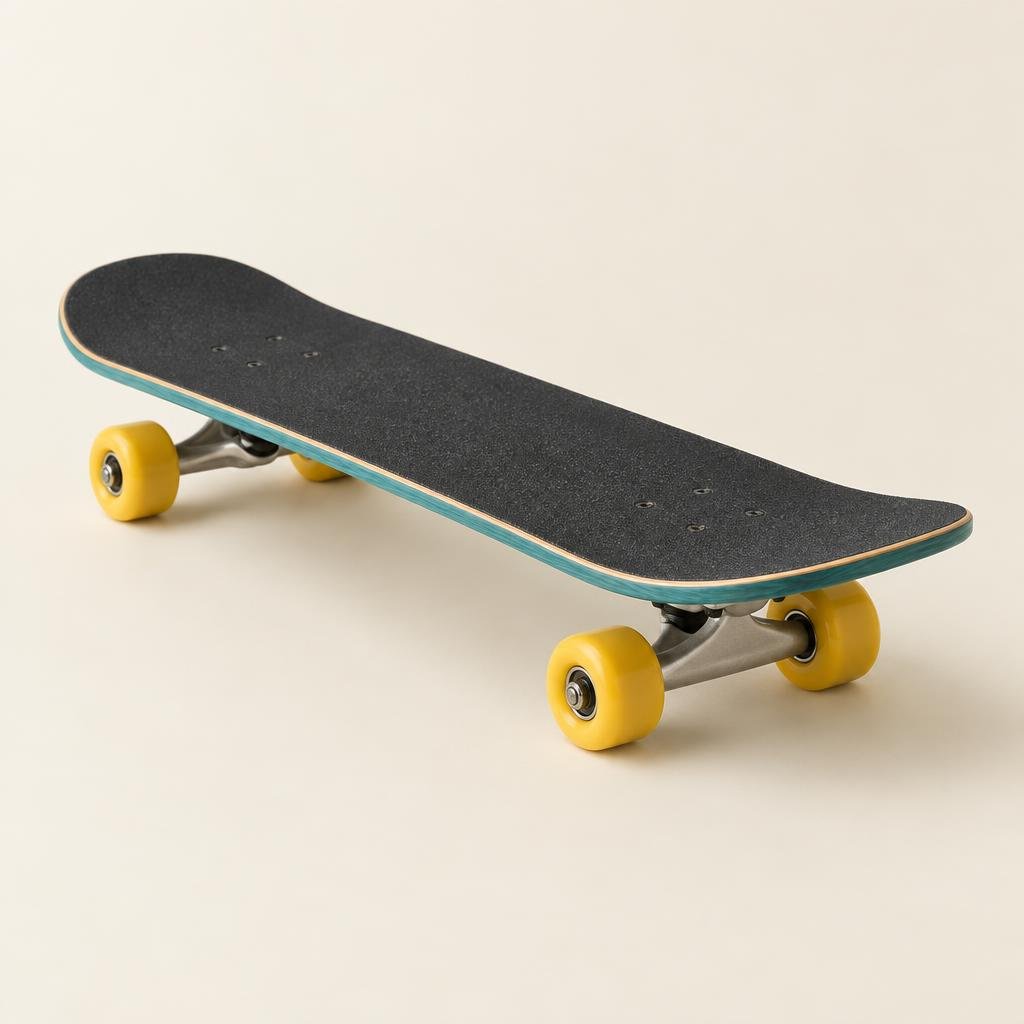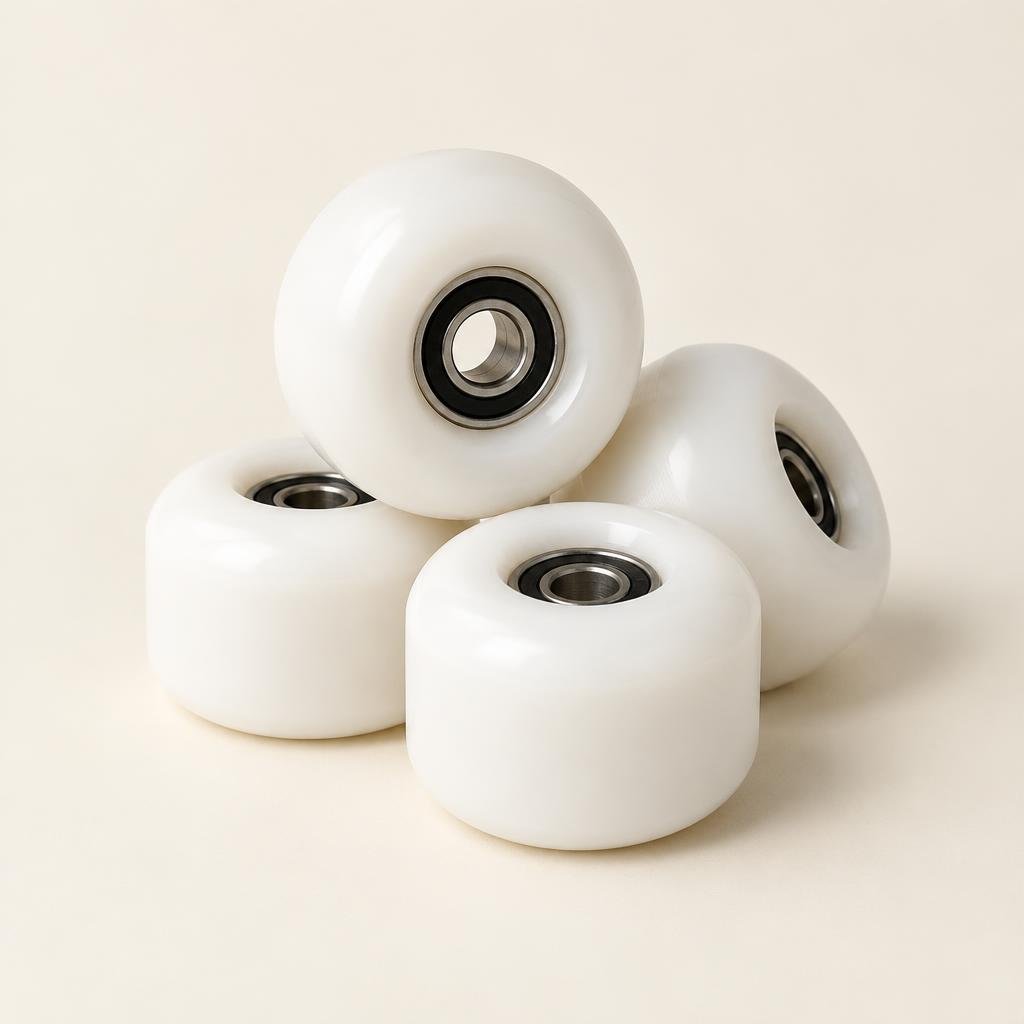

Wheels are the part of a board you feel most. They are made from polyurethane, a tough plastic that grips the ground and rolls smoothly. Every wheel has a bearing pressed into each side of the hub, and those bearings are what let it spin. Everything else on the board stands still while the wheels do the moving.
Polyurethane is a useful material because it can be made softer or harder without losing its toughness. Makers change the recipe to get different feels, and that one choice explains most of the differences you notice between wheels. A wheel is more than a ring of plastic, and small changes in how it is built show up quickly under your feet.
The hub is the center of the wheel, and the bearings sit in it. Some wheels have a thicker core and a thinner layer of urethane around it, and others are solid all the way through. Neither is wrong. The core mostly affects how the wheel holds its shape and how evenly it wears over time.
When you shop, it helps to know that the numbers printed on a wheel are not just decoration. You will usually find a size in millimeters and a hardness rating. Those two figures tell you most of what you need before you ever roll it, so learn to read them first.
Hardness, Size and Feel
Hardness is the main thing that changes how a wheel feels. Softer wheels grip better and soak up rough pavement, so they suit cruising and bumpy streets. Harder wheels slide more easily and roll fast on smooth ground, which is why many people use them at skateparks. Most of the choice comes down to that trade between grip and speed.
Hardness is usually given on the durometer scale, with a number followed by the letter A. A higher number means a harder wheel. Very soft wheels can feel almost sticky, while very hard ones can feel slick and loud. Most people end up somewhere in the middle, where a wheel does a bit of everything fairly well.
Size matters as well. Smaller wheels sit closer to the deck and feel quick and responsive for tricks. Larger wheels roll over cracks more easily and keep their speed, which helps if you travel a lot on rough streets. Diameter is measured in millimeters, and a few millimeters either way is enough to change how the board responds.
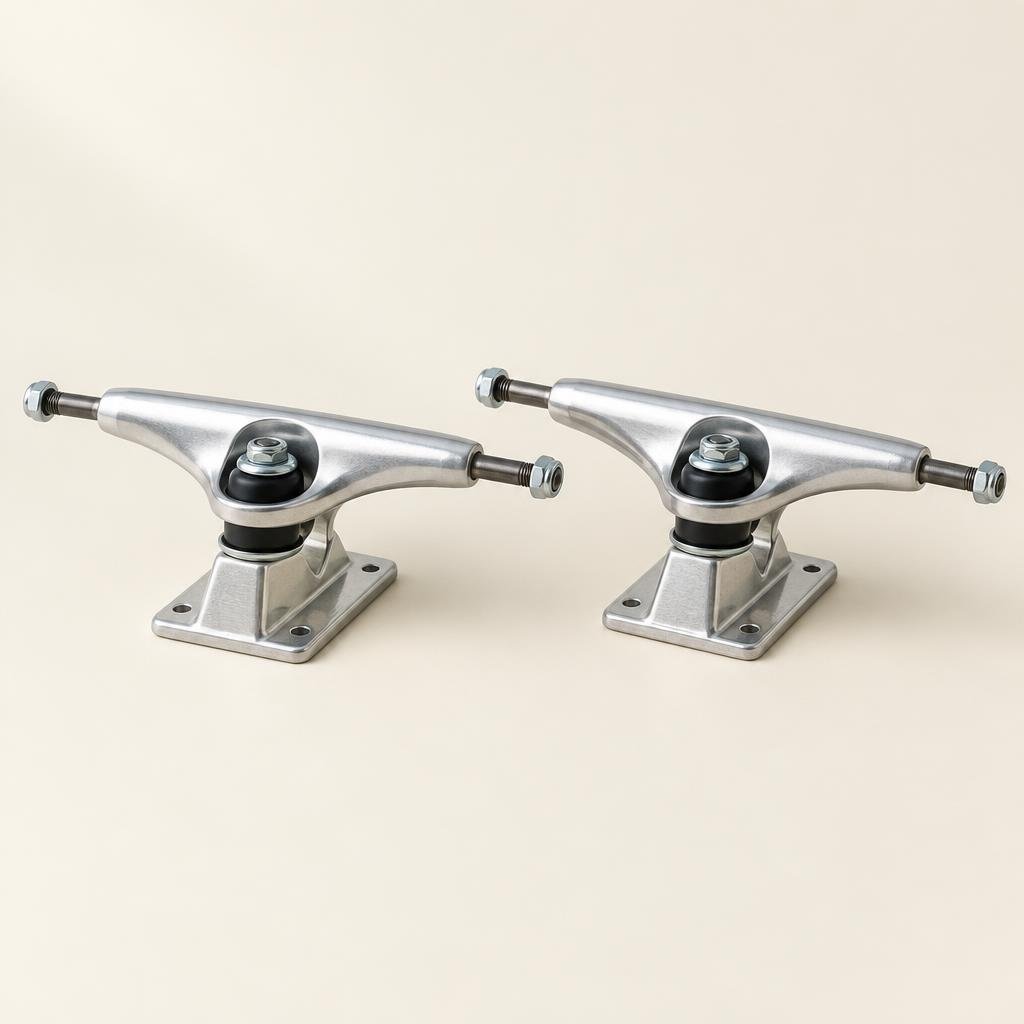
There is a catch with bigger wheels. They sit higher, so the deck rides further from the ground, and a large wheel can rub the underside of the deck when you turn hard. Riser pads can fix that by lifting the trucks. Smaller wheels avoid the problem but give up some speed on rough ground.
Caring for Your Bearings
Bearings are small steel rings with balls inside, held in a shield. They collect dirt and moisture over time, and a gritty one will slow your board down. If a wheel stops spinning freely, the bearing is the first thing to look at. A clean set can make the board feel noticeably faster.
Bearings are often sold with a rating number, and it is tempting to assume a higher number means a faster ride. In reality, that number mostly describes how tightly the parts are made. Good bearings that are kept clean will outlast fancy ones that are ignored, so upkeep matters more than the label.
Keeping bearings clean is simple. Pop the shields off if they allow it, wipe out the dirt and add a little light lubricant made for bearings. Avoid heavy grease, since it traps grit and slows the spin. A drop or two is plenty, because too much oil attracts dust and turns into a sticky paste.
Water is the thing bearings dislike most. Riding through puddles lets moisture in, and steel can start to rust once it stays damp. If your board gets wet, dry it off and let the bearings air out before you put it away. A little attention here saves you from replacing a set early.
Wear, Mounting and Choosing
Wheels wear down unevenly, and you will see flat spots after hard braking or sliding. Swapping the wheels from side to side can even out the wear. When they are worn too small or lumpy, a fresh set makes the board feel new. Rotating them every so often is easier than waiting until one side is badly worn.
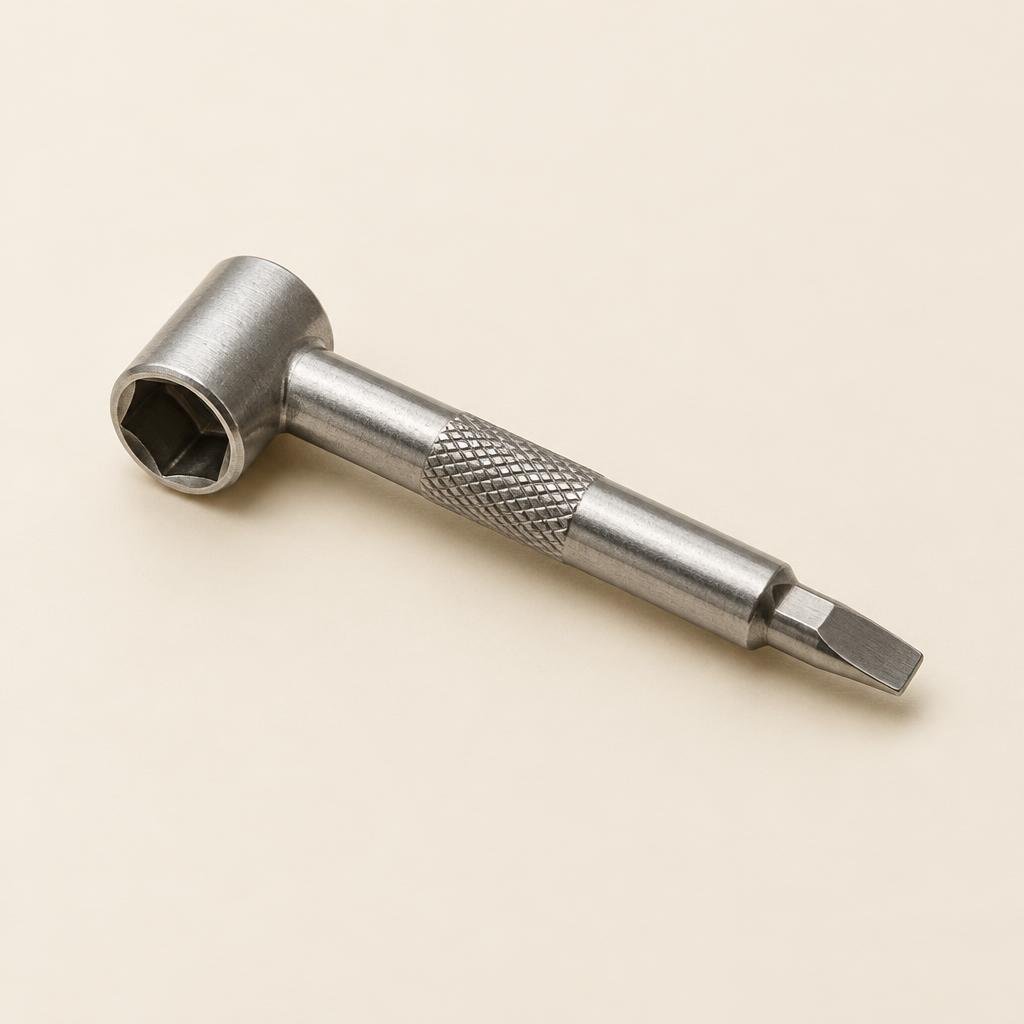
Mounting wheels is a job for a skate tool. The axle nut holds the wheel on, and you tighten it until the wheel spins freely with no wobble. Too tight and it drags, too loose and it rattles. A small spacer between the two bearings inside the hub keeps them lined up when the nut is tightened.
A common mistake is pressing the bearing in crooked. Push the wheel down onto the bearing seated on the axle, rather than hammering it, and it will sit flat. A bearing that goes in at an angle can bind and spin poorly. Take your time with each side, and check the spin before you ride.
There is no single best wheel. Think about where you ride most, try a set, and change them when the board stops feeling right. Your first set does not have to be perfect. Pay attention to how the board behaves on your usual routes, and let that guide the next pick. Wheels are one of the easiest parts to swap, so experimenting costs little and teaches you a lot about what you like.