
Choosing your first skateboard deck
Picking a first deck can feel harder than it should. There are lots of sizes, shapes and graphics, and everyone seems to have an opinion. The good news is that a few simple ideas cover most of what you need to know, and none of them require a lot of experience to understand.
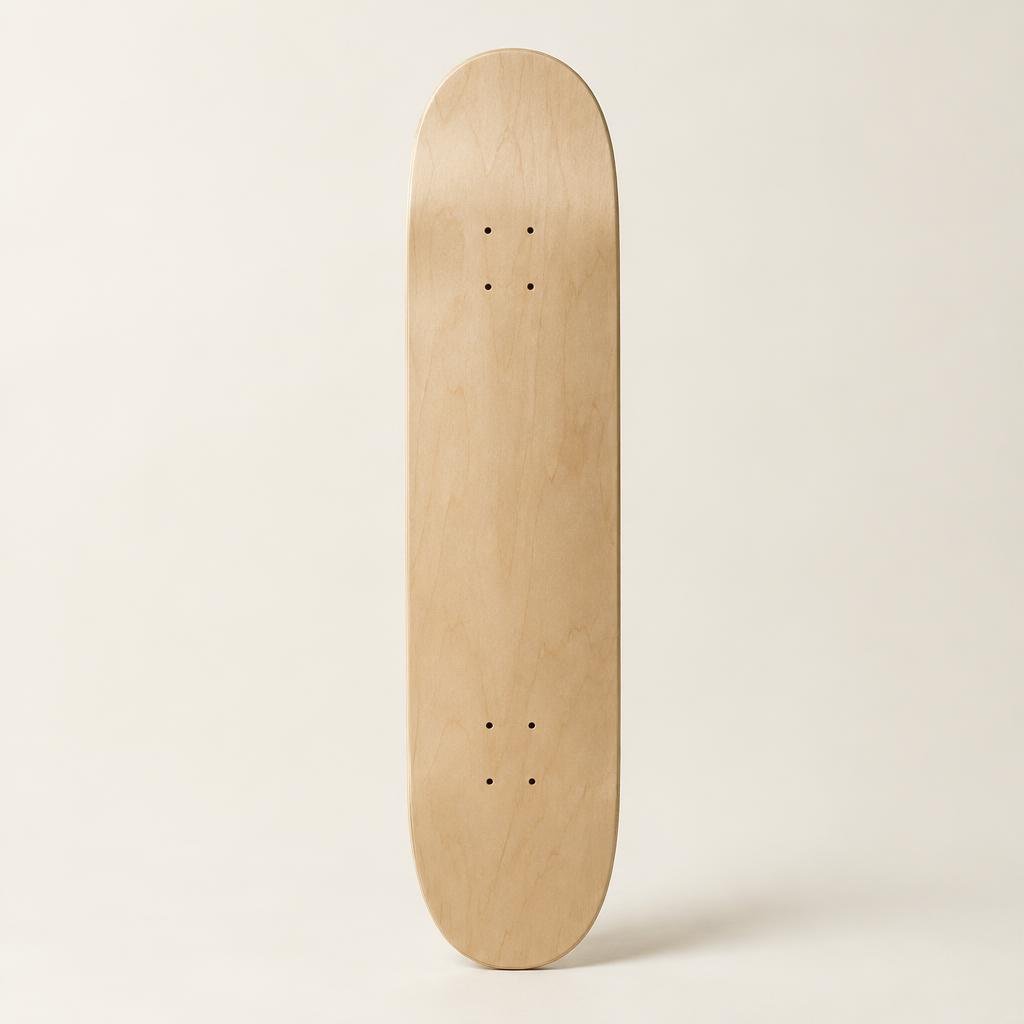
Most decks are made from layers of maple pressed together, and that is why they are stiff and snap back after an ollie. The wood grain you see on a blank deck is just the outer layer of that stack. Under it, the other layers run in different directions, which adds strength.
That cross-grain building matters more than it sounds. If every layer ran the same way, the board would split along the grain far more easily. Alternating the direction spreads the force of landings across the whole deck, so it flexes a little and then springs back instead of breaking.
Width and How It Feels
Width is the first thing to think about. A narrower deck feels quick and light under your feet, which suits flip tricks and technical skating. A wider deck gives you more room for your feet and feels steadier, which many people like for cruising, ramps and bowls.
The trade-off is simple. A narrow board is easier to flick and spin, but it gives you less platform when you land slightly off. A wide board forgives sloppy landings, but it is a little heavier to move around, and that can make quick tricks feel like more work.
Your shoe size and how you ride matter more than any chart. If you are tall or have big feet, a wider deck usually feels more comfortable. If you are small or like to spin the board around, a narrower one is easier to control.
It helps to think about what you want to do first. Someone who wants to roll to the shop and back has different needs from someone who wants to learn kickflips in a car park. Be honest about your plans, and pick the width that fits those, not the one that looks best on a wall.
Shape, Concave and Kicks
Shape matters too. The nose and tail curve upward, and that is called the concave. A deeper concave locks your feet in and helps flip tricks, while a mellow one feels flatter and more relaxed under a cruising stance.
Concave is something you feel more than see. Stand on a deck in a shop and notice how the edges press against the sides of your shoes. A deep curve feels snug and a little aggressive, while a gentle one feels open. Neither is better, so choose the one your feet like.
The upturned ends are often called the nose and tail, and they are what let you pop the board into the air. Steeper kicks give more leverage for popping, but beginners often do fine with a moderate angle. The more important thing is that both ends feel solid when you press down.
One common mistake is buying a deck purely for its graphic. A beautiful design on a board that is too wide or too narrow for you will just make learning harder. Look at the artwork last, once you know the size and shape feel right under your feet.
Grip Tape and Trucks
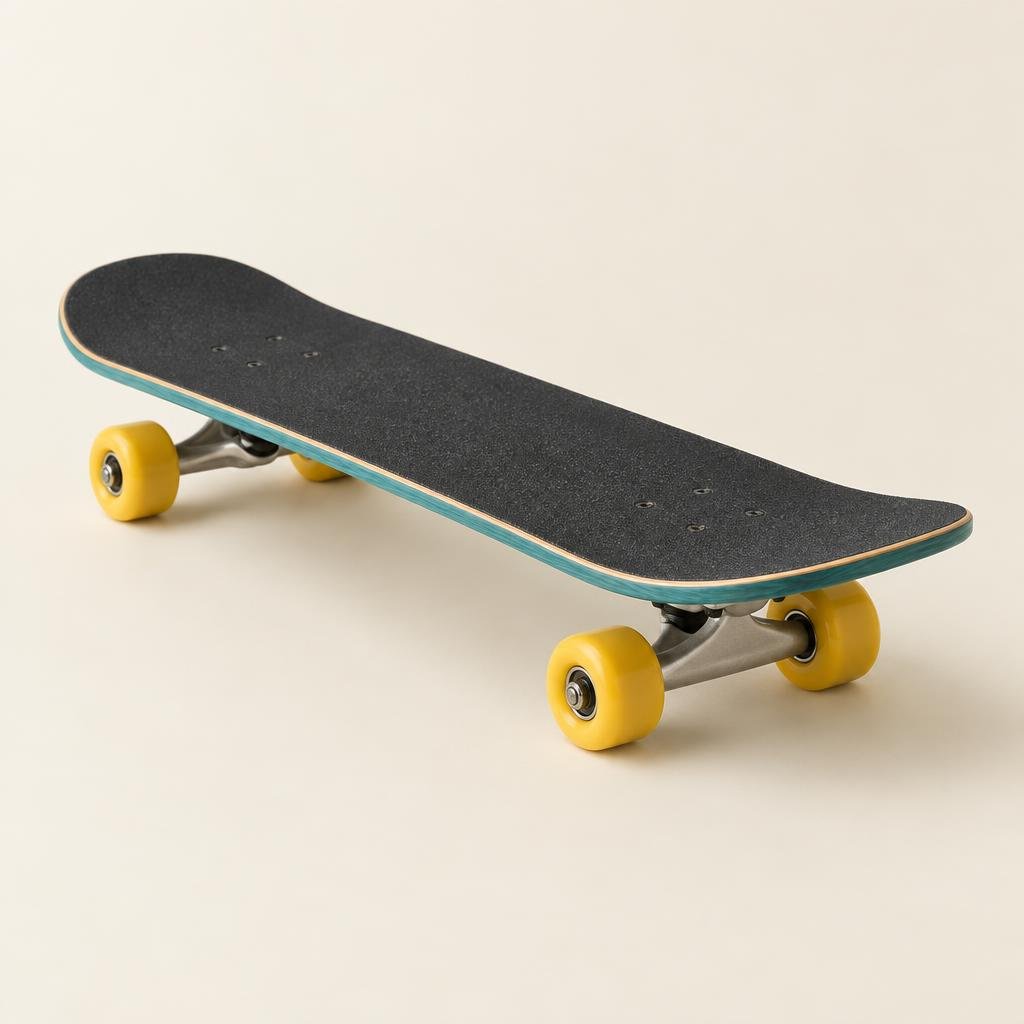
Grip tape is the sandpaper-like surface on top. It keeps your shoes stuck to the board, and it is applied flat with the edges trimmed. A bad grip job leaves bubbles, so having it done properly before you start saves frustration later.
Bubbles matter because they make the surface uneven, and they can peel at the edges after a few sessions. A smooth, tight application gives you the same bite everywhere on the board. That consistency helps your feet find the same spot every time, which is what builds confidence.
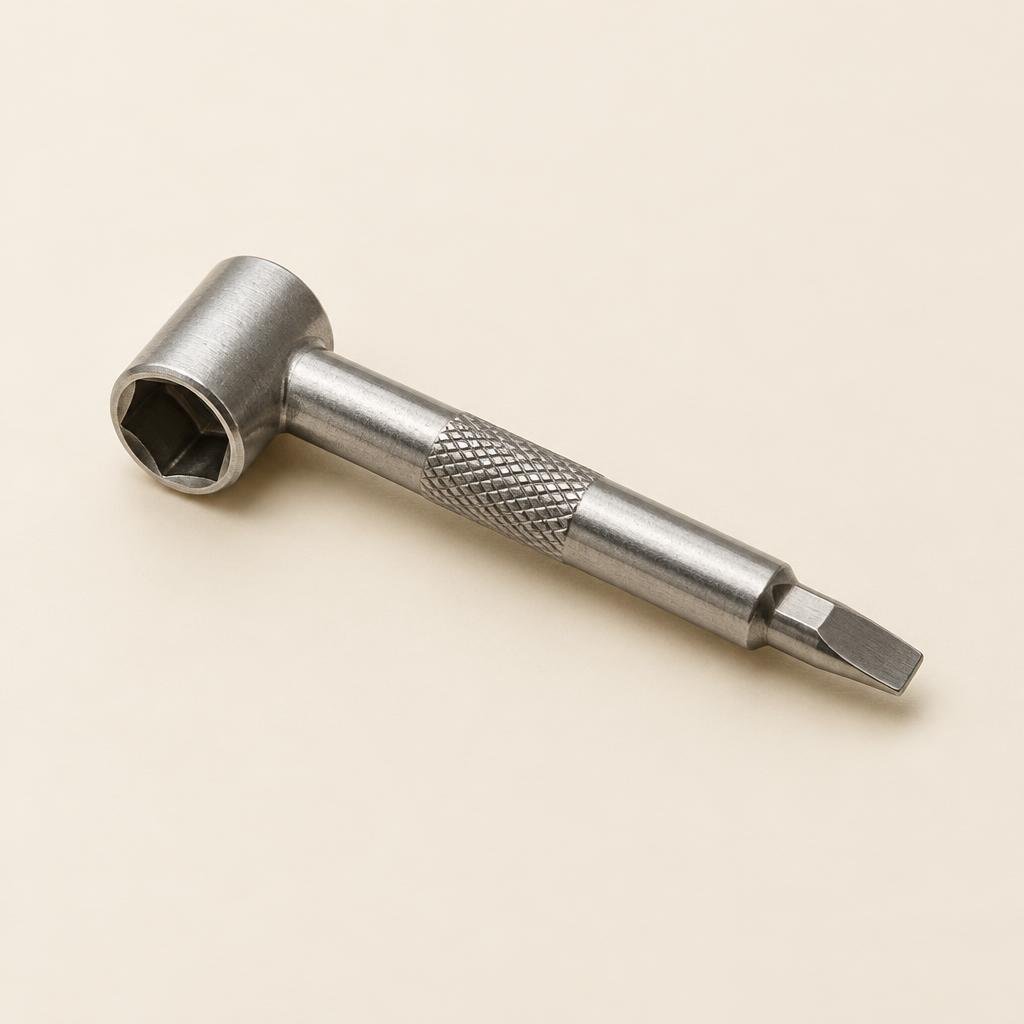
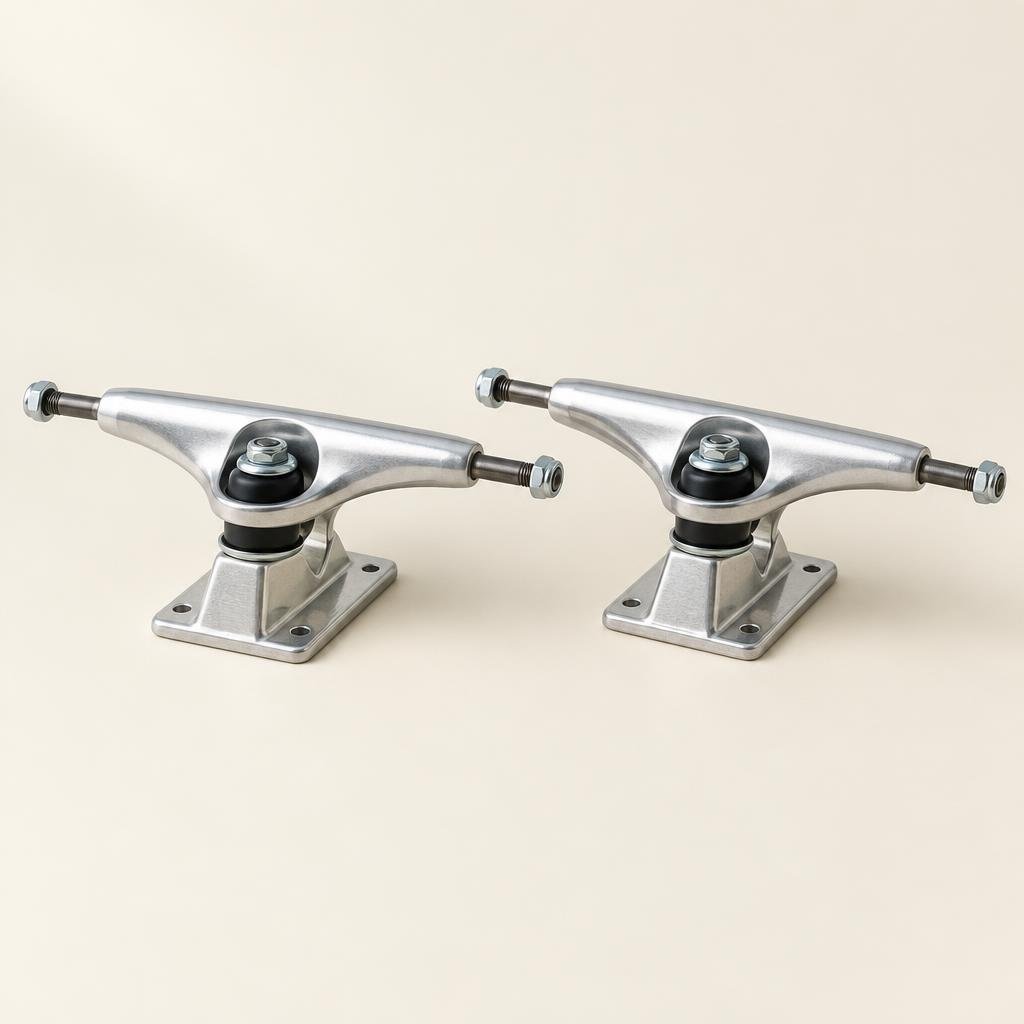
The four holes at each end are where the trucks bolt on. You line the trucks up with those holes and fix them with bolts and nuts, and a skate tool makes that quick. It is worth checking everything is tight before every session.
Tighten the nuts a little at a time, moving from corner to corner rather than finishing one side first. That keeps the truck sitting flat against the deck. If a nut keeps working loose, it usually means it needs a snug final turn, and the bolts should not stick out too far past it.
Settling in and Caring for It
Do not worry about picking the perfect deck the first time. You will learn what you like by riding it, and the next deck will be an easier choice. Start with something comfortable and spend your time on the board rather than the decision.
Most skaters find their preferences change as they improve. A board that feels right in the first month may feel too big or too small later, and that is completely normal. Each deck teaches you something about width, concave and weight, so nothing is wasted.
Once you have your deck, keep it out of the rain and away from long soaks. Wood that gets wet can swell and lose its pop over time. A dry corner at home is all it needs between sessions.
It also helps not to leave a board in a hot car or against a radiator, since sudden heat can warp the layers. Lean it somewhere stable, wheels down or standing on its tail, and wipe off any grit before you put it away. A little care keeps it feeling lively for much longer.